56
TOBACCO BUSINESS
SEPTEMBER/OCTOBER 2013
place, Morgan is turning his attention
to packaging and to building on the
17 varieties—14 corncob and three
hardwood—of pipes that the company
currently offers. “We’ve updated our
packaging to make more of an impact
at the retail level, and we’re also looking
to bring back a design from the past—
the bulldog—as well as to launch a new
design we came up with a month ago,”
he says, noting that the pipes retail for
between $4 and $15.
Ultimately, Morgan’s goal is to bring
the company back into the preeminent
position it once held in the tobacco
sector. “When we started going to trade
shows again, people would tell me, ‘I
didn’t know you were still in business,’”he
says. “Well, we have been in business for
144 years and we intend to be in business
for another 144 years.”
TB
Corncob Pipe 101
An accountant by trade, Phil Morgan had to learn everything there was to know about
making corncob pipes very quickly. Here he shares that wisdom:
“After we harvest the corn, we bring it to our corn crib area, shell it and sell the
grain, which can be used to make tortillas and things like that. After we shell the
corn, we bring cobs to our three-story plant and store them on the second and
third floor for two years to let them dry out thoroughly.
“You want them as dry as possible because we need the woody ring—the
middle of a cob is soft pith, the next layer is a woody ring as hard as wood—to
be as dry and hard as possible. After two years it is about ideal.
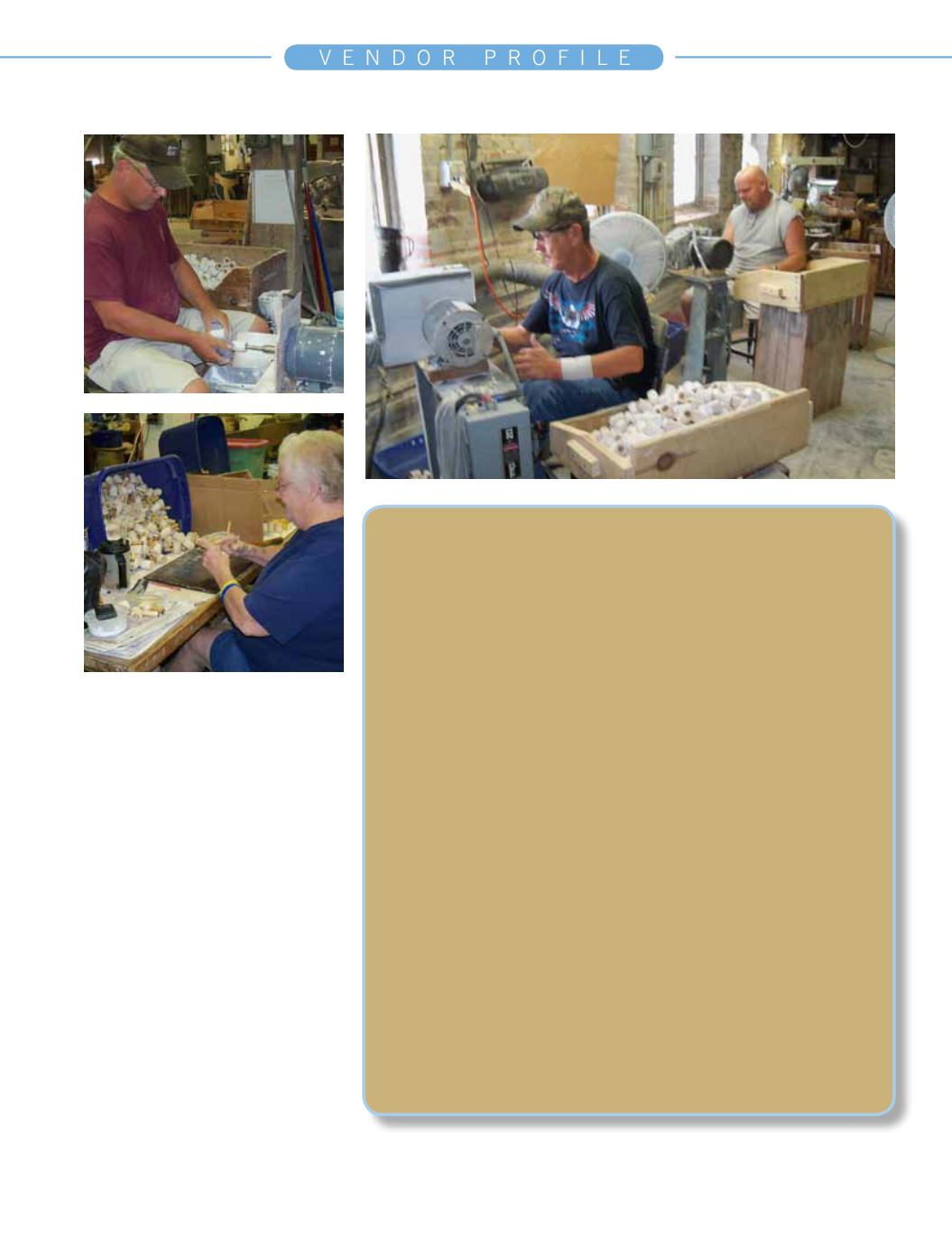
“Once the ring is dry enough, the cobs come down in chutes to the first floor
production area.There, they are sawed into sections, each about two inches.The
next step is boring the tobacco hole, where you drill and shape that section of
cob to the pipe bowl. About one-third of our pipes are turned by hand on a lathe,
just like you would do with woodworking, and the rest go to turning machines
that we patented back in the 30s and 40s that shape the cobs into a pipe bowl.
“After the bowl is shaped, what happens next depends on whether the bowl
will be coated or uncoated. Some pipe-smokers prefer a natural corn; the ones
left in a natural state smoke cooler. But most are coated with a plaster-based
substance by hand after they are shaped, sanded smooth, and then given a light
coating of lacquer. That is where the name Missouri Meerschaum came from:
Meerschaum is a German word that means ‘sea foam.’ A true Meerschaum pipe
is made of a porous clay that comes from Turkey that can be carved. One of the
characteristics of those pipes is that they smoke very cool, and you get the true
taste of your tobacco. Our founder discovered that corncob pipes had similar
characteristics, so he called them Missouri Meerschaums.
“After the bowl is coated and the lacquer is applied, the stem hole is drilled.
At that point it goes into the finishing room, where the stems are assembled and
attached. It doesn’t take long to make an individual pipe—it’s growing the corn
that takes the time.”


